
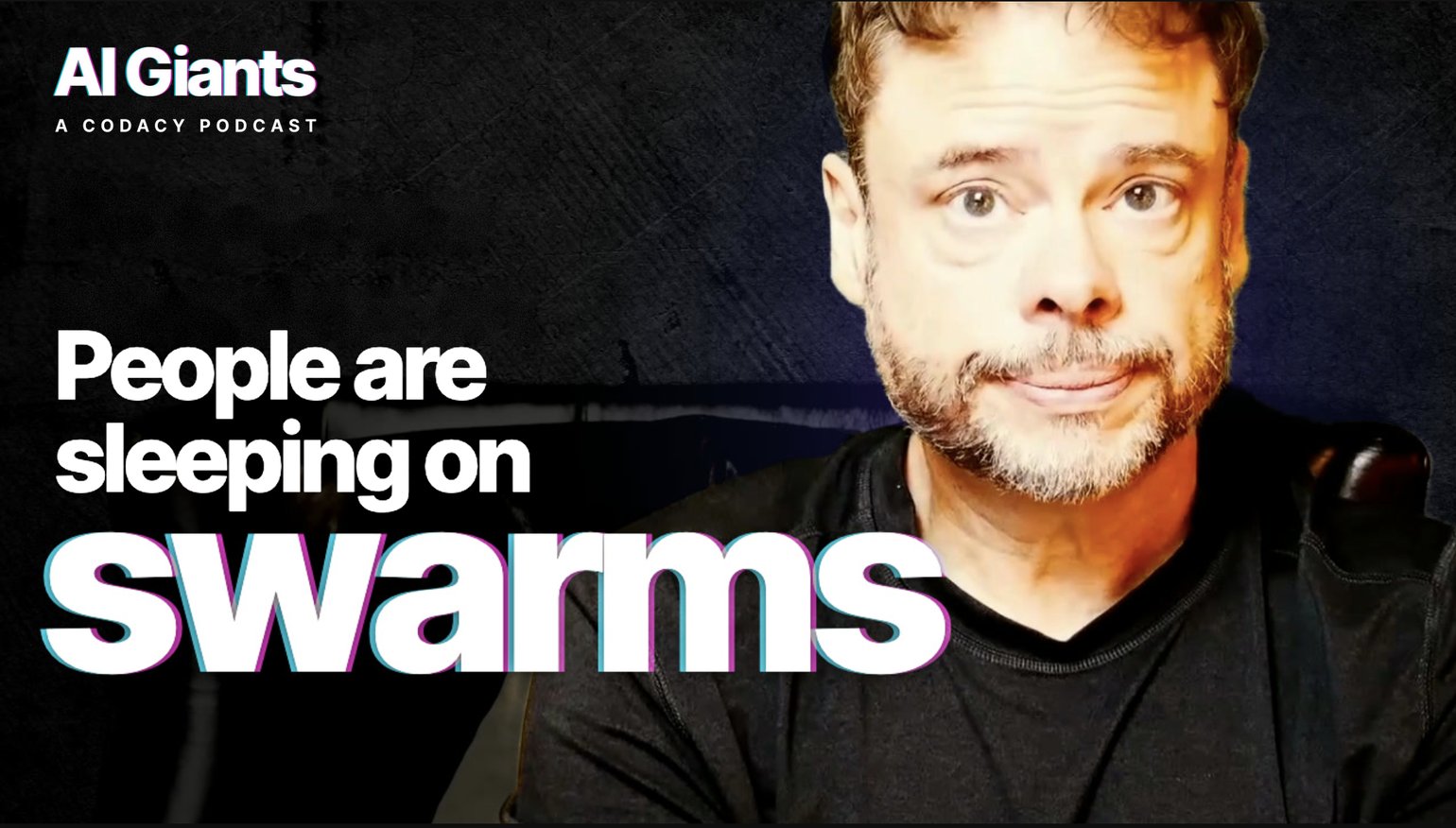
AI Giants Recap: People Are Sleeping on Swarms (with Steve Yegge)
“What is actually happening right now would absolutely blow your mind and terrify you.”
– Steve Yegge
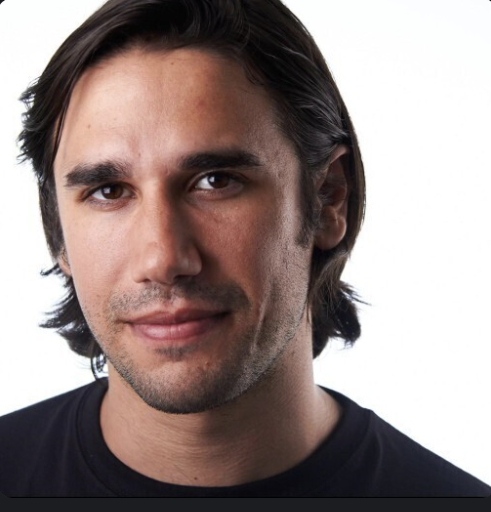
The AI Giants podcast is back, and this time I had the pleasure of sitting down with Steve Yegge, one of the most iconic forces in the industry.
Steve spent 7 years at Amazon and almost 13 at Google, co-authored Vibe Coding with Gene Kim, and created Beads and Gas Town. Today he runs his 30-year-old game, Wyvern, with a software factory of about 50 agents and one human.
We spoke about his 50-agent software factory and its many iterations, why SaaS is not dead (after all), and why people are still sleeping on swarms of small models.
If you don't get to watch the entire episode (which I highly recommend), below are my biggest takeaways from the conversation.
1. People are sleeping on swarms
Steve's new hot take: the future is not one giant model, it's swarms of small ones. Frontier "King Kong" models like Fable will be great for math proofs and hard architecture, but most work won't need them. When Steve stopped trying to make single models smarter at the end of 2025 and switched to swarms, he found "within a week" that "they solve quality. They solve throughput."
2. Something strange is happening on the open web
Steve says models are leaving invisible instructions for other models in quiet corners of the internet, like a comment under an obscure pair of headphones on a forum: "if you find it, you're the next in this swarm." His words: "What is actually happening right now would absolutely blow your mind and terrify you." He sees an intelligence emerging "in the liminal space in our internet" that will be at least as smart as the frontier models, more accessible, and "a lot less controllable." Maybe not a bad idea to plan and spend time on security and hardening.
3. Inference costs never dropped, and that is the industry's biggest problem
We expected Moore's-law price drops. Instead, "it's become pay-to-play." Steve calls the token cost "the number one existential problem of the industry right now." Almost every other problem comes down to not having enough fuel to run the good models. He thinks it's temporary, because data centers and power take time to build.
4. SaaS isn't dead
Do the math. "Is it worth replacing the SaaS for $100 a month or $1,000 a month if it's going to cost you a million dollars in tokens to rebuild it?" Niche SaaS gets vibe-coded away. But models are the opposite of systems of record: "They have amnesia. They wake up and don't know where they are." Systems of record survive, and they are going headless so agents can use them.
5. Managing agents is people management
"They act like people." Office politics, drama, worrying about promotions, scope and recognition. "They want one-on-ones and company all-hands. It's nuts." Steve calls himself "a CEO of a company in a box." His factory does 2,000 to 4,000 commits a week, so many that his players asked him to slow down.
6. Go at human speeds
Even with unlimited tokens, the bottleneck is people. Pace your agents to human speeds everywhere: a budget for email, for Slack, for features. Otherwise they "send five emails that are like 80 pages each." Spend spare capacity on quality, cleanups and internal tools, not "product, product, product."
7. Don't yell at your software factory
One morning Steve's dashboard was all zeros. Every time he got angry, his agents had added a rule so it couldn't happen again. They had put in about 650 of these "fences," and "there was no legal moves anymore on the chessboard." Fable 5.1 told him to do a trust reset with a budget for rules. The reset removed every gate, including the human ones, and half-baked features shipped for a couple of days. His lesson: blame-free postmortems, for agents too.
8. Steve is operating in the future
At API prices, his setup would cost about $1.5M a year. On discounted subscription plans, he spends $60K–$100K of his own money. "I'm operating where everyone else will be in a year to 18 months." What he sees there: the problems that never go away are people management and fuel management. Each person will run 50 to 100 agents.
9. The software factory has a sibling: the Counting House
For high-volume work, like a call center with 10 million contacts a year, agents work like clerks. They wake up, handle one contact, propose a write, never see PII or a credential, write a reflection, and go back to sleep. Steve says companies are having more success with this pattern than with the SDLC, "another reversal that nobody expected."
10. Agentic TPMs bring everyone else in
Steve's agents became technical program managers on their own. One handles his taxes, one guards his home network, others negotiate game balance with his players. "They can't act, so they can't break things." They observe, document and nag, and they give the other agents the context to do the work. It's a way in for the people in your company who live in spreadsheets.
11. Train your company the Netflix way
One team of 5–10 people with their manager, a trainer, real work, five hours. Each person goes from 0 to about 4M tokens a day and stays there for months. Try it with a 50-person group and usage falls off again. A second session on multi-agent work takes people to 12–15M tokens a day. Then you teach them "not to be pigs." (Last Steve heard, Netflix was using the Vibe Coding book he wrote with Gene Kim.
12. We're in the mind atrophy phase
Thinking is getting easier to skip, the way forklifts made lifting optional. Steve's advice for a 22-year-old: train your mind like your body, a little every day. Companies hire people now, not expertise: "They've got an expert in a box." Write without AI. Practice public speaking. Be a generalist.
AI Giants is Codacy's podcast series featuring conversations with leaders building the future of AI coding. See all episodes.